This is a judgment on meaning in a libel claim between the blogger Richard Millett, and Jeremy Corbyn MP, former leader of the Labour Party.
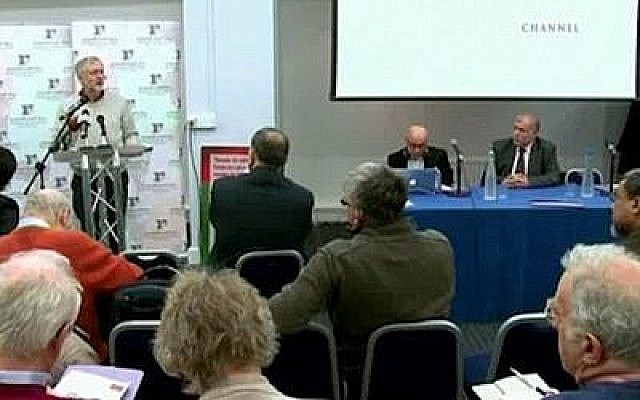
The complaint stems from an interview given on the BBC Andrew Marr Show, when Corbyn was still the leader of the party. A video had surfaced of a meeting from 2013, in which Corbyn had described people who had attended a meeting as “not understanding English irony.” There was a public row about whether this statement was a form of antisemitism, and Andrew Marr asked Corbyn about this. In his response, Corbyn said that he was responding to people who has been “disruptive” and “abusive” in the meeting.
There were four issues to be determined. The first was whether Mr Millett could amend his pleading to include additional articles in support of his arguments. The judge denied this, saying Mr Millett could and should have made the application to include new evidence much earlier.
The second issue concerned the fact that Mr Corbyn did not name Mr Millett in the Marr interview. The court was therefore required to determine. whether Corbyn’s comments were a ‘reference innuendo’ i.e. whether a reasonable reader with knowledge of other facts, would infer that the defendant was talking about the claimant. Saini J noted the framework set out by Warby J in Lachaux v Independent Print Ltd [2016] QB 402, which itself cites earlier authorities, for determining whether a reference innuendo is made out. The test is not whether there exist people who did make the connection, but rather if a reasonable reader would have done so.
Saini J considered five articles that identified Mr Millett as having been present at the 2013 meeting. He ruled that, for people who had read any one of them, Mr Millett would be easily recognisable as one of the people Corbyn was speaking about in the Marr interview.
The third issue was whether the statements that the Claimant was abusive and disruptive were statements of fact, or opinion. Saini J noted that even if they were Corbyn’s opinions, they were presented without further information to support the opinion. Such statements are treated as a ‘bare comment’ akin to fact.
The final issue was whether Mr Corbyn’s comments were indeed defamatory. His counsel had argued that they were part of the hustle-and-bustle of politics. However, Saini J ruled that the imputation that Millett was abusive and disruptive at a political meeting suggested that his behaviour was “contrary to shared values in our society”—a phrasing that, Saini J suggested, was a better standard than considering whether the imputation described “immoral” behaviour.
Full judgment on BAILII: Millett v Corbyn [2020] EWHC 1848 (QB)
Comment
For Mr Corbyn to prevail at trial therefore, it is likely that he will have to show that Mr Millett was indeed abusive and disruptive at the 2013 meeting.